


OSHA Emergency Notification System Requirements
Can Your Employees Hear Your Emergency Alerts?
In high-noise environments, most systems fail this basic OSHA requirement.
OSHA Emergency Notification System Requirements (29 CFR 1910.165)
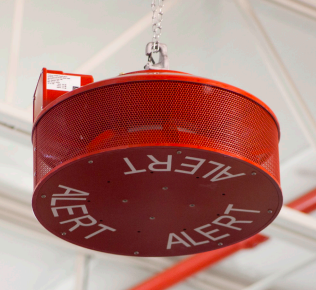
OSHA requires that emergency notification systems must be clearly heard above ambient noise and must provide employees with clear warning and sufficient time to respond.
In real-world environments like warehouses, factories, industrial plants, schools, and large facilities, this is where many systems fall short.
If employees cannot hear or understand an emergency alert, the system may not meet OSHA requirements.
Where Most Systems Fail
- High-noise environments drown out alerts
- Outdoor areas have little or no coverage
- Systems rely on tones instead of clear voice instructions
- Paging does not override phones or background audio
- No automatic weather or emergency alerts
- Employees hear something, but do not understand what action to take
If the alert cannot be heard or understood, it does not do the job OSHA expects it to do.
If your facility has loud areas, outdoor spaces, or multiple buildings, there is a good chance there are gaps.
Request a Free OSHA Compliance Review →
OSHA Compliance – Key Requirements
Under OSHA 29 CFR 1910.165, employee alarm and emergency notification systems must meet the following key requirements:
- Audibility: Alarm signals must be clearly heard above ambient noise levels by all employees
- Visibility: Visual or tactile alerts must be provided where audible alarms may not be sufficient
- Distinctive Signals: Alerts must be recognizable and clearly indicate required action
- Intelligibility: Employees must be able to understand and respond appropriately to the alert
- Priority Messaging: Emergency communications must override all non-emergency communications
- Response Time: Systems must provide sufficient warning for safe evacuation or response
- Reliability: Systems must be maintained in working condition and restored promptly after activation
- Testing: Alarm systems must be tested regularly to ensure reliability and adequacy
- Training: Employees must be trained on alarm meanings and emergency procedures
How We Help
- Clear voice emergency alerts instead of tones only
- Coverage for loud industrial and outdoor environments
- Integration with existing paging, phone, and notification systems
- Emergency messaging that can take priority when needed
- Automated emergency notification options, including severe weather alerts
For more than 30 years, we have helped customers design emergency notification systems that work in real-world conditions.
Free OSHA Compliance Review
We will review your current system and help identify possible gaps in audibility, intelligibility, coverage, and overall emergency communication performance.
Request a Free System ReviewCall 800-335-0229
Learn more about paging horns and speakers used in high-noise environments.